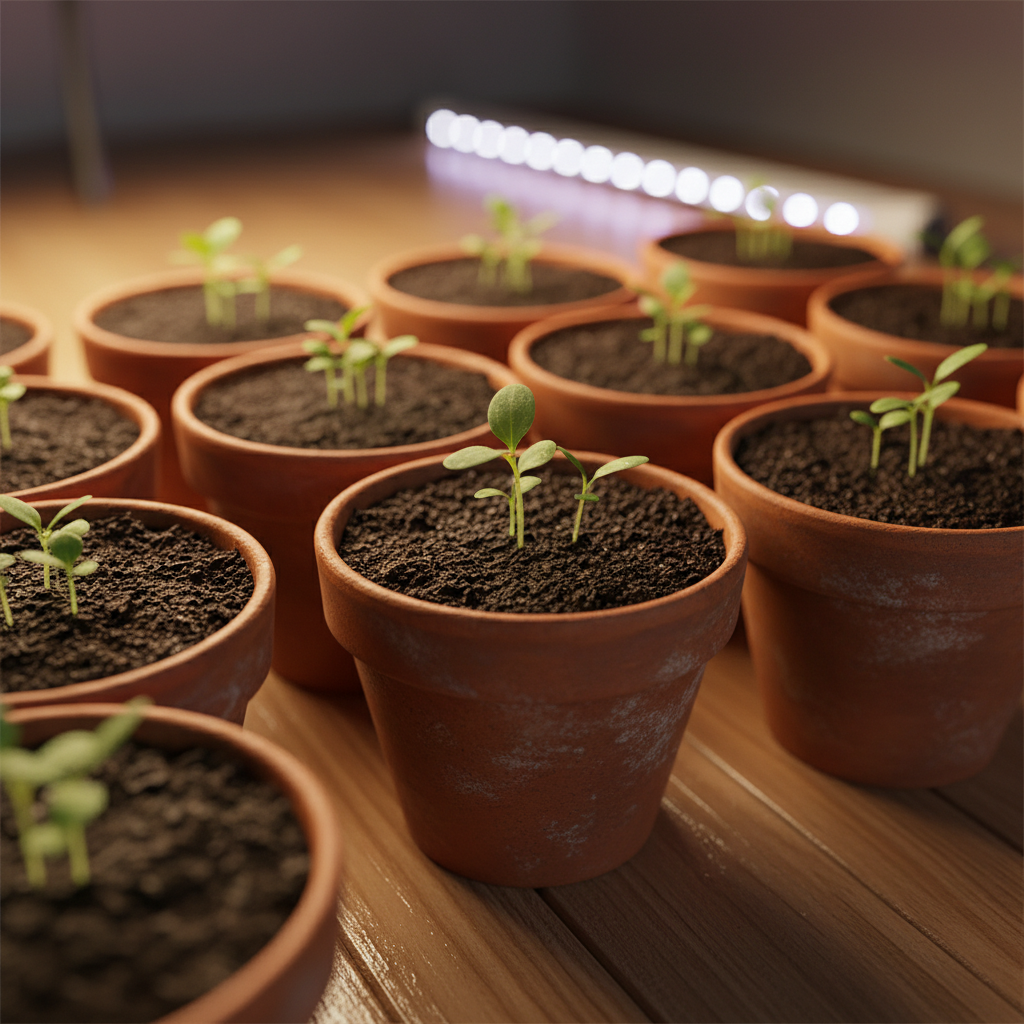
Why April is Perfect for Starting Cannabis Seeds
April represents the sweet spot for indoor cannabis cultivation. Whether you're planning an outdoor summer grow or maintaining a year-round indoor garden, starting seeds this month gives you several advantages. The longer daylight hours provide natural supplementation to your indoor lighting, while moderate spring temperatures reduce the burden on your climate control systems.
For outdoor growers in most US legal states, April germination means your seedlings will be ready for transplant after the last frost date. In states like California, Oregon, and Colorado, this timing aligns perfectly with optimal outdoor growing conditions. Indoor growers benefit from the stable spring weather, which makes maintaining consistent growing environments much easier.
Essential Equipment for Seed Starting
Success starts with proper equipment. Your seed-starting setup doesn't need to be elaborate, but certain components are non-negotiable for healthy germination and early growth.
Lighting Requirements
Cannabis seedlings need 18-24 hours of light daily during their vegetative stage. A quality LED grow light provides the spectrum and intensity young plants require without generating excessive heat. Position your light 24-30 inches above seedlings initially, adjusting closer as plants establish.
LED lights consume less electricity than traditional HID systems while producing less heat—crucial when maintaining the 70-75°F temperature range optimal for seedling development. For a small-scale setup, a single LED panel can effectively cover 4-6 seedlings during their first few weeks.
Temperature and Humidity Control
Maintaining consistent environmental conditions is critical during germination and early growth. Cannabis seeds germinate best between 70-85°F with humidity levels around 65-70%. Once sprouted, seedlings prefer slightly cooler conditions (70-75°F) with humidity maintained at 55-65%.
Proper ventilation prevents stagnant air and reduces the risk of damping-off disease, which can kill seedlings within days. A small circulation fan provides adequate air movement for seed-starting operations without creating harsh drafts that stress young plants.
Growing Medium Selection
The growing medium you choose significantly impacts germination rates and early plant health. High-quality potting soil designed for seedlings provides the right balance of drainage and nutrient availability. Look for mixes containing perlite for drainage and vermiculite for moisture retention.
Avoid soils with time-release fertilizers or high nutrient concentrations, which can burn delicate seedling roots. Cannabis seeds contain enough stored energy to support initial growth, requiring only minimal nutrients during the first 2-3 weeks.
Step-by-Step Seed Germination Process
The Paper Towel Method
This proven technique offers excellent germination rates with minimal equipment. Start with high-quality, viable seeds from reputable sources. Fresh seeds typically show germination rates of 80-90%, while properly stored older seeds may achieve 60-70% success rates.
Place seeds between moistened paper towels, ensuring the towels are damp but not dripping wet. Fold the towels to create a sealed environment and place them inside a plastic bag or container. Maintain temperatures between 70-80°F in a dark location.
Check seeds daily for progress. Most viable seeds show initial cracking within 24-48 hours, with visible tap roots emerging by day 3-4. Once tap roots reach 0.5-1 inch long, they're ready for transplanting to growing medium.
Direct Soil Germination
Some growers prefer planting seeds directly in their final growing medium, eliminating transplant shock. Create small holes 0.25-0.5 inches deep in moistened soil. Place seeds pointed end down (if you can determine orientation) and lightly cover with soil.
Keep soil consistently moist but not waterlogged. Use a spray bottle to mist the surface rather than watering directly, which can displace or bury seeds too deeply. Germination typically takes 3-7 days using this method.
Transplanting and Early Care
Successfully moving germinated seeds to their growing containers requires gentle handling and attention to detail. Use small containers (2-4 inches) for initial transplanting, allowing you to control moisture levels more precisely than large pots would permit.
Create a small hole in your growing medium approximately 0.5 inches deep. Carefully place the germinated seed with the tap root pointing downward and the seed casing at soil level. Cover lightly with loose soil, leaving space for the cotyledons (first leaves) to emerge.
Watering Young Seedlings
Overwatering kills more seedlings than any other factor. Young cannabis plants have limited root systems and cannot process large amounts of water. Water when the top inch of soil feels dry, typically every 2-3 days for small containers.
Use pH-balanced water between 6.0-6.8 for soil-grown seedlings. Room temperature water prevents shocking sensitive roots. Water slowly around the base of the plant rather than directly onto the stem.
Nutrient Management
Seedlings require minimal nutrients during their first 2-3 weeks. Quality potting soil provides sufficient nutrition for initial growth. Signs of overfeeding include dark green leaves, stunted growth, or leaf tip burning.
Begin light feeding around week 3-4 when plants show 2-3 sets of true leaves. Start with quarter-strength liquid nutrients, gradually increasing concentration as plants mature. Balanced nutrients with equal NPK ratios work well for vegetative growth.
Common Seedling Problems and Solutions
Damping-Off Disease
This fungal condition causes seedlings to wilt and die suddenly, typically where the stem meets the soil. Prevention involves maintaining proper air circulation, avoiding overwatering, and using sterile growing medium.
If damping-off appears, immediately improve air circulation and reduce watering frequency. Remove affected plants to prevent spread to healthy seedlings.
Stretching
Seedlings that grow tall and spindly are reaching for inadequate light. Move lights closer to plants or increase daily light duration. Stretched seedlings can often be saved by providing proper lighting and gently burying excess stem when transplanting to larger containers.
Slow Growth
Several factors contribute to slow seedling development, including low temperatures, poor lighting, or pH imbalances. Verify that growing conditions meet optimal ranges and test soil pH if growth remains stunted.
Timing Your Indoor Growing Schedule
Planning your growing schedule depends on your end goals and local regulations. Indoor growers have flexibility to start new plants year-round, while outdoor growers must coordinate with natural seasons.
For outdoor transplanting, count backward from your area's last frost date. Most seedlings need 4-6 weeks of indoor growth before they're hardy enough for outdoor conditions. This means April germination typically results in late May or early June transplanting in most northern states.
Indoor growers can stagger plantings every few weeks to ensure continuous harvests. Each plant requires 8-12 weeks of vegetative growth plus 8-10 weeks of flowering, depending on strain characteristics.
Legal Considerations by State
Home cultivation laws vary significantly across legal states. Understanding your local regulations prevents legal issues and helps you plan appropriately sized grows.
States like California and Oregon allow up to 6 plants per adult (12 per household), while others like Washington prohibit home cultivation entirely. Some states require plants to be grown in locked, enclosed areas away from public view.
Check current regulations in your state before beginning any growing project. Laws can change, and local municipalities may impose additional restrictions beyond state requirements. Visit our state-by-state guide for current legal information.
Setting Up Your Growing Space
Whether using a dedicated room, closet, or grow tent, proper space setup determines your success throughout the growing cycle. Even seedlings benefit from organized, controlled environments.
A small grow tent provides excellent environmental control for beginners. These enclosed spaces allow precise management of lighting, temperature, and humidity while containing any odors. For seed starting, even a 2x2 foot space can accommodate multiple plants during their early weeks.
Ensure adequate electrical capacity for your lighting and ventilation equipment. LED lights and small fans draw minimal power, but proper circuit planning prevents electrical issues as your setup expands.
Strain Selection for Beginners
Choosing appropriate strains significantly impacts your growing success. Some varieties offer greater forgiveness for beginner mistakes while providing satisfying yields and effects.
Indica-dominant strains typically grow more compactly and finish faster than sativas, making them suitable for limited spaces and shorter growing seasons. Hybrid varieties often combine the best characteristics of both types.
Consider autoflowering varieties for your first grows. These strains automatically transition from vegetative to flowering growth regardless of light schedules, simplifying cultivation for beginners. Most autoflowers complete their entire lifecycle in 8-10 weeks.
Use our strain finder tool to identify varieties suited to your experience level and growing conditions.
Planning for Long-Term Success
Successful cannabis cultivation extends far beyond germination. Planning your entire growing cycle during the seed-starting phase prevents problems and maximizes your final results.
Consider your space limitations when determining plant numbers. Cannabis plants can grow quite large during their 3-4 month lifecycle, requiring 2-4 square feet per plant at maturity.
Budget for ongoing expenses including electricity, nutrients, and replacement supplies. Indoor growing costs vary widely depending on your setup, but expect monthly operating costs of $50-150 for small-scale operations.
Keep detailed records of your growing activities, including germination dates, feeding schedules, and environmental conditions. This information becomes invaluable for improving future grows and troubleshooting problems.
FAQ Section
How long do cannabis seeds take to germinate?
Most viable cannabis seeds germinate within 2-5 days using proper techniques. The paper towel method typically shows results in 1-3 days, while direct soil germination may take 3-7 days. Seeds older than 2-3 years may take longer or show reduced germination rates.
What temperature is best for germinating cannabis seeds?
Cannabis seeds germinate optimally between 70-85°F (21-29°C). Temperatures below 65°F significantly slow germination, while temperatures above 90°F can damage or kill seeds. Maintain consistent temperatures throughout the germination period for best results.
Can I start seeds outdoors in April?
Starting seeds outdoors in April depends on your climate and local frost dates. Most northern states still experience frost risk in April, making indoor starting safer. Southern states with mild springs may allow outdoor germination, but indoor starting provides better control over environmental conditions.
How often should I water newly sprouted seedlings?
Water seedlings when the top inch of soil feels dry, typically every 2-3 days. Small containers dry faster than large pots, requiring more frequent attention. Always check soil moisture rather than following rigid schedules, as environmental conditions affect watering needs.
When can I transplant seedlings to larger containers?
Transplant seedlings when they outgrow their initial containers, usually 2-4 weeks after germination. Look for roots appearing through drainage holes or plants becoming top-heavy. Transplant during the plant's active growth period rather than during stress or dormancy.