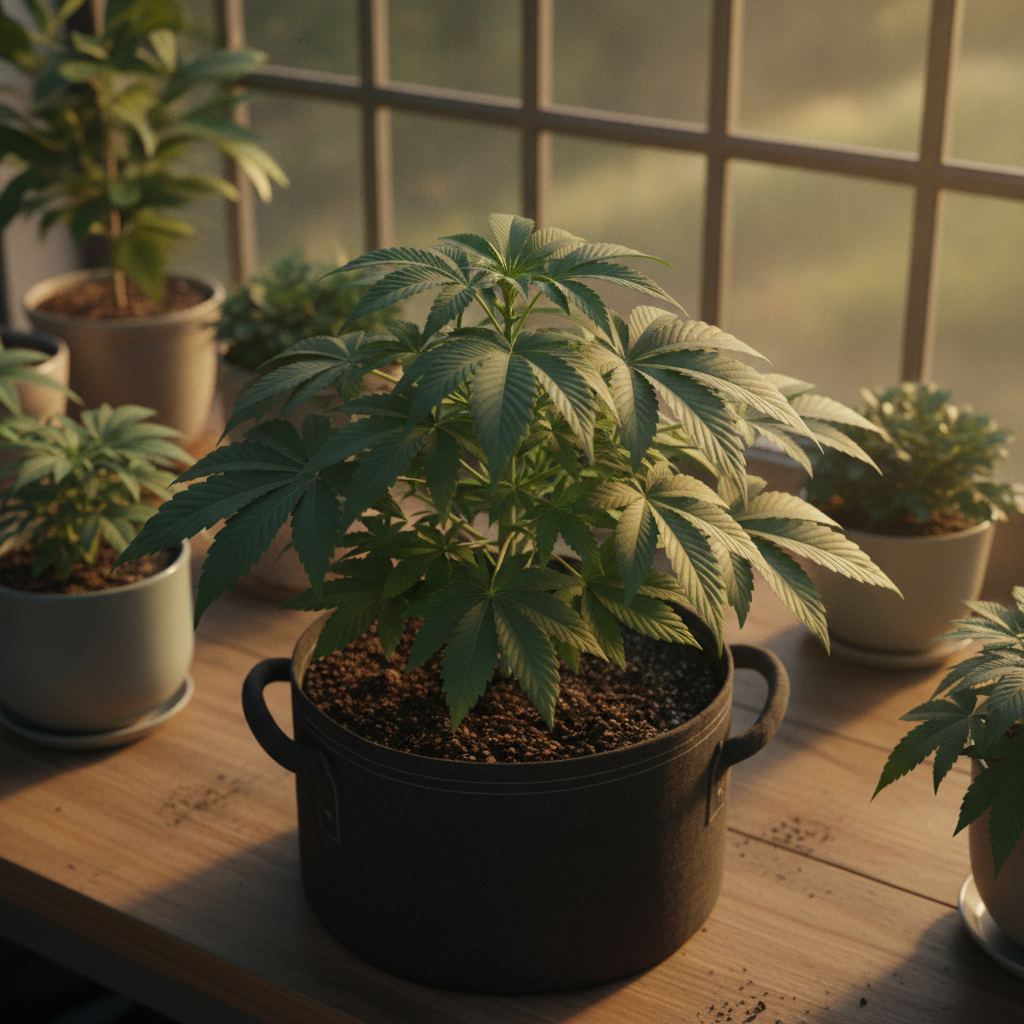
Why Blue Dream Belongs in Your Home Garden
Blue Dream has earned its reputation as one of the most popular strains in the United States for a reason — it's productive, relatively forgiving, and adapts well to both indoor and outdoor environments. For home growers in legal states, it sits in a sweet spot: tolerant enough for beginners to succeed with, but responsive enough to reward the techniques intermediate growers want to practice.
June is an ideal time to be thinking about Blue Dream. Outdoor plants started in April or May are now pushing through peak vegetative growth, and if you're in a warmer state like California, Arizona, or Colorado, your outdoor Blue Dream plants could be approaching or just entering pre-flower. Indoor growers have the flexibility to start or flip on their own schedule, but right now conditions favor aggressive growth — and Blue Dream will absolutely use every bit of it.
This guide covers what makes Blue Dream distinct, how to set it up for success during the vegetative stage, what to watch for as flowering approaches, and how to protect your plants through some of the pest pressure that peaks in summer months.
If you're still deciding whether Blue Dream is the right fit for your setup, the HomeGrow Strain Finder can help you compare it against other options based on your grow space, experience level, and state regulations.
Blue Dream: What You're Actually Working With
Blue Dream is a sativa-dominant hybrid, typically running somewhere between 60% sativa and 40% indica depending on the phenotype and breeder. It was developed in California, where it became a commercial staple, and most accounts trace its lineage to Blueberry (indica) crossed with Haze (sativa).
Growth Characteristics
This is a tall plant. Indoors, expect Blue Dream to stretch significantly during the first two to three weeks of flowering — often doubling in height from where it was at the flip. Outdoors, mature plants regularly reach five to six feet, and in ideal conditions can push past seven. If you're working in a standard 4x4 tent setup, height management during veg is not optional; it's essential.
The branching structure is open and Christmas-tree shaped, which is good for light penetration but means the lower canopy can get shaded out if you don't defoliate or train. More on that shortly.
Typical Numbers to Expect
- Flowering time: 9 to 10 weeks indoors; outdoor harvest typically falls in late September to mid-October depending on latitude
- Indoor yield: 400–500g per square meter under optimized conditions; 200–350g/m² is realistic for first-time growers
- Outdoor yield: 500–700g per plant under full sun with a long season
- THC range: 17–24% depending on genetics, environment, and cure quality
- CBD: Typically below 1%
Flavor and Effect Profile
The Blueberry parentage gives Blue Dream a sweet, berry-forward aroma with subtle earthy undertones. The Haze influence adds a light herbal quality that becomes more pronounced as plants mature. Effects are generally described as uplifting and cerebral without being overwhelming — one of the reasons it's become a go-to for people who are newer to cannabis or prefer a functional, daytime-appropriate experience.
Setting Up Blue Dream for a Strong Vegetative Stage
If your Blue Dream seedlings went in the ground or into their final containers in April or May, they should be showing vigorous vegetative growth right now. June's long days — 14 to 15 hours of natural light in most of the US — are optimal for keeping outdoor plants in veg while they build the root structure and canopy they'll need to support a heavy flowering cycle.
Container and Soil Recommendations
Blue Dream develops an aggressive root system. Limiting root space early is one of the most common reasons plants underperform at harvest. For final containers, aim for a minimum of 5 gallons for indoor plants and 10–15 gallons for outdoor plants. Fabric pots are worth considering here — the air pruning that happens at the root tips encourages lateral root branching rather than root circling, which translates directly to better nutrient uptake and more vigorous above-ground growth. Fabric grow pots are a low-cost upgrade with a measurable impact on final yield.
For soil, Blue Dream performs well in a rich, well-draining medium. FoxFarm Ocean Forest is a reliable choice for home growers — it has enough built-in nutrition to carry seedlings and young plants through the first four to six weeks without supplemental feeding, which reduces the chance of early nutrient issues. It runs slightly acidic, typically around pH 6.2–6.5 out of the bag, which lands right in the ideal range for soil-based cannabis cultivation.
Light Requirements Indoors
Blue Dream is a light-hungry strain. Indoors, it responds well to higher PPFD (photosynthetic photon flux density) during veg — target 400–600 µmol/m²/s for younger plants, increasing to 600–800 µmol/m²/s as the canopy fills in. LED fixtures in the 200–400W range cover a 4x4 space effectively and run cool enough to maintain reasonable temperatures without complex cooling setups.
The Mars Hydro TS1000 is a practical option for a single-plant or small canopy setup — it delivers adequate intensity for Blue Dream through veg and into early flower without the heat penalty of older HPS fixtures. For a fuller 4x4 canopy, consider pairing two units or stepping up to a higher-wattage fixture. You can compare current equipment options on the HomeGrow equipment page.
Temperature and Humidity Targets
- Daytime temperature: 72–82°F (22–28°C) during veg
- Nighttime temperature: Keep within 10°F of daytime temps to avoid stress
- Relative humidity during veg: 50–70% is ideal; Blue Dream tolerates humidity reasonably well in veg but becomes more susceptible to mold as buds develop
- VPD target (vegetative): 0.8–1.2 kPa
If you're growing indoors and struggling to maintain stable temperatures during June heat, airflow is your first lever. An inline fan with speed control — the AC Infinity CLOUDLINE T4 is a well-regarded option for 4-inch ducting — gives you precise control over exhaust rate and helps stabilize both temperature and humidity without running an air conditioner at full blast. Good airflow also strengthens stems, which Blue Dream needs given how tall it grows.
Training Techniques That Work Well for Blue Dream
Because Blue Dream stretches significantly in early flower, the goal during veg is to build a wide, even canopy rather than a tall central cola. Two approaches work particularly well:
Low-Stress Training (LST): Bend and tie the main stem and branches outward while they're still flexible, creating a horizontal canopy. This opens up light penetration to lower bud sites and keeps the height manageable. Start LST when the plant has six to eight nodes and continue adjusting ties weekly as new growth comes in.
Screen of Green (ScrOG): A horizontal screen placed 12–18 inches above the canopy allows you to weave branches through as they grow, creating a uniform flat canopy. Blue Dream's branching pattern is well-suited to ScrOG — the open structure means branches are easy to work with, and the technique reliably improves bud site distribution and final yield.
Topping is also effective on Blue Dream photoperiods (as opposed to autoflowers, where the calculus is different — see our earlier guide on that topic). Top above the fifth or sixth node while the plant is still in active veg, well before any flowering signals appear. This gives the two resulting main colas time to develop fully before the stretch begins.
Transitioning to Flower: What to Watch for in June
For outdoor growers in most US states, Blue Dream plants won't initiate flower naturally until daylight hours drop below roughly 13 hours — which typically happens in late July to early August. That means you still have four to six weeks of vegetative growth ahead for most outdoor plants right now.
However, in southern states like Texas (where cultivation remains illegal — check state-specific rules here before growing), Florida, or Hawaii, day length shortens earlier in the season relative to how far south you are. Conversely, growers in northern states like Washington, Oregon, or Michigan have some of the longest summer days in the country, giving Blue Dream more time to build canopy mass before flowering begins.
Indoor growers control this entirely by managing their light schedule. Flipping from 18/6 to 12/12 initiates flower on demand. Given Blue Dream's stretch, many experienced indoor growers flip when plants are 40–50% of the desired final height to leave room for that post-flip extension.
Nutrient Transitions at Flowering
During the first two weeks after flip (or pre-flower for outdoor plants), Blue Dream still benefits from moderate nitrogen levels alongside rising phosphorus and potassium. A gradual transition rather than an abrupt shift prevents deficiency stress during the stretch phase.
The FoxFarm Liquid Nutrient Trio (Grow Big, Big Bloom, Tiger Bloom) is a straightforward approach that covers this transition well — Grow Big handles the nitrogen-heavy veg phase, and you can begin phasing in Tiger Bloom as the pre-flower stretch starts. Follow the recommended schedule and monitor runoff pH to catch any lockout issues early. Soil pH should stay between 6.0 and 7.0, with 6.3–6.8 being the sweet spot for nutrient availability.
A reliable pH meter matters more than most new growers expect. The Apera pH20 is an accurate, well-priced option that holds calibration well and gives consistent readings — pH errors are one of the most common causes of deficiency symptoms that look like nutrient problems but are actually uptake issues caused by incorrect pH.
Pest and Disease Management in Summer
June brings peak pest pressure in most growing regions, and Blue Dream's dense future canopy makes it worth being proactive rather than reactive.
Common Threats in Summer
Spider mites: Thrive in hot, dry conditions. Check the undersides of leaves weekly — you're looking for tiny moving dots and fine webbing. Outdoor plants near dusty areas or other vegetation are at higher risk. Neem oil or insecticidal soap sprays are effective at early stages; avoid spraying once flowering begins as residue can affect flavor.
Aphids: Cluster on new growth and under leaves. A strong spray of water can knock populations down, and introducing beneficial insects like ladybugs is an effective organic approach for outdoor grows.
Fungus gnats: A bigger issue for container plants than in-ground. Overwatering is the primary driver — allowing the top inch or two of soil to dry between waterings breaks the larval cycle. Yellow sticky traps near soil level help monitor populations.
Powdery mildew: Blue Dream is moderately susceptible, particularly when nighttime humidity stays above 60–65% as plants mature. Ensure good airflow around and through the canopy. Outdoors, choose a site with good air movement rather than a sheltered, still corner of a yard. Indoors, airflow from a clip fan or oscillating fan directed through the canopy helps prevent the stagnant humid pockets where PM thrives.
If you're seeing unusual symptoms on your plants and aren't sure whether you're dealing with pests, deficiency, or something else, the HomeGrow Plant Diagnosis tool can help you work through what you're seeing and identify likely causes.
Harvest Timing and What to Expect
Blue Dream's long flowering time (9–10 weeks) means patience pays off. Harvesting too early is the most common mistake — the difference between week eight and week ten in terms of bud density, resin production, and overall weight is significant.
The most reliable harvest indicator is trichome color viewed under magnification (a jeweler's loupe at 30–60x or a digital microscope works well). For Blue Dream specifically:
- Mostly cloudy trichomes with minimal amber: Peak THC, more energetic effect profile — often preferred for daytime use
- 20–30% amber trichomes: THC beginning to convert to CBN, slightly more sedating effect, heavier body feel
- Pistil color: A useful secondary indicator — expect 70–90% of white pistils to have darkened and curled before you're in the harvest window
Drying and Curing Blue Dream
Blue Dream's berry-forward terpene profile is particularly sensitive to cure quality. A rushed dry or inadequate cure will flatten the aroma significantly. Dry in a dark space at 60–65°F and 55–65% humidity for 10–14 days, targeting a slow dry rather than a fast one. When small stems snap rather than bend, you're ready to jar.
Cure in airtight glass jars for a minimum of two to four weeks, burping daily for the first week and then every few days. Boveda 62% humidity packs placed inside jars during the cure and storage phase maintain consistent humidity and help preserve terpene quality over time — particularly useful if you're growing a larger batch and plan to store jars for more than a few weeks.
For a complete walkthrough of the growing process from setup through harvest, the HomeGrow Complete Growing Guide covers each stage in detail. If you're ready to put together a full equipment setup, the HomeGrow Bundles page includes curated options matched to different grow sizes and budgets.
Frequently Asked Questions
Is Blue Dream a good strain for first-time home growers?
Yes, with one caveat: manage its height. Blue Dream is forgiving about minor feeding and environmental fluctuations, produces generously, and gives a long window for correcting mistakes before harvest. The challenge for first-time indoor growers is that it stretches aggressively in early flower and can overwhelm a tent if you don't manage canopy height during veg. Start LST early, flip at 40–50% of your target height, and you'll be well positioned.
How much does Blue Dream yield indoors compared to outdoors?
Outdoors under full sun with a complete season, Blue Dream is one of the higher-yielding strains available — 500–700g per plant is achievable in ideal conditions in California or the Pacific Northwest. Indoors, expect 350–500g per square meter under optimized conditions with an experienced grower. First-time indoor growers should target 150–250g per plant as a realistic baseline and build from there.
Can I grow Blue Dream in a 4x4 tent?
Yes, it works well in a 4x4 with proper training. A ScrOG setup or consistent LST is important given the plant's tendency to stretch. Most growers in a 4x4 run one to four plants depending on container size and training approach — fewer plants in larger containers with longer veg time often outperform more plants with shorter veg periods. Maintain adequate light intensity (a quality LED in the 200–400W range) and airflow, and Blue Dream will perform well in that footprint.
When should I start feeding Blue Dream nutrients if I'm using FoxFarm Ocean Forest?
Ocean Forest provides enough base nutrition to carry plants for approximately four to six weeks from transplant without supplemental feeding. Watch for signs of nitrogen deficiency (pale green or yellowing lower leaves) as a signal that the soil's built-in nutrients are being depleted. At that point, introduce a veg-phase nutrient at half the recommended dose and increase gradually based on plant response. Always check runoff pH when feeding — aim for 6.3–6.8 in soil to ensure nutrients are actually available at the root zone.
What's the difference between Blue Dream phenotypes?
Blue Dream seeds from different breeders can express noticeably different characteristics. More sativa-leaning phenos will stretch further, take longer to flower, and produce a lighter, more citrus-forward aroma. Indica-leaning phenos tend to be shorter, finish faster, and express more of the Blueberry berry notes. If you're buying seeds rather than clones, reading breeder notes about which phenotype expression to expect from their specific genetics will help you plan your grow accordingly.