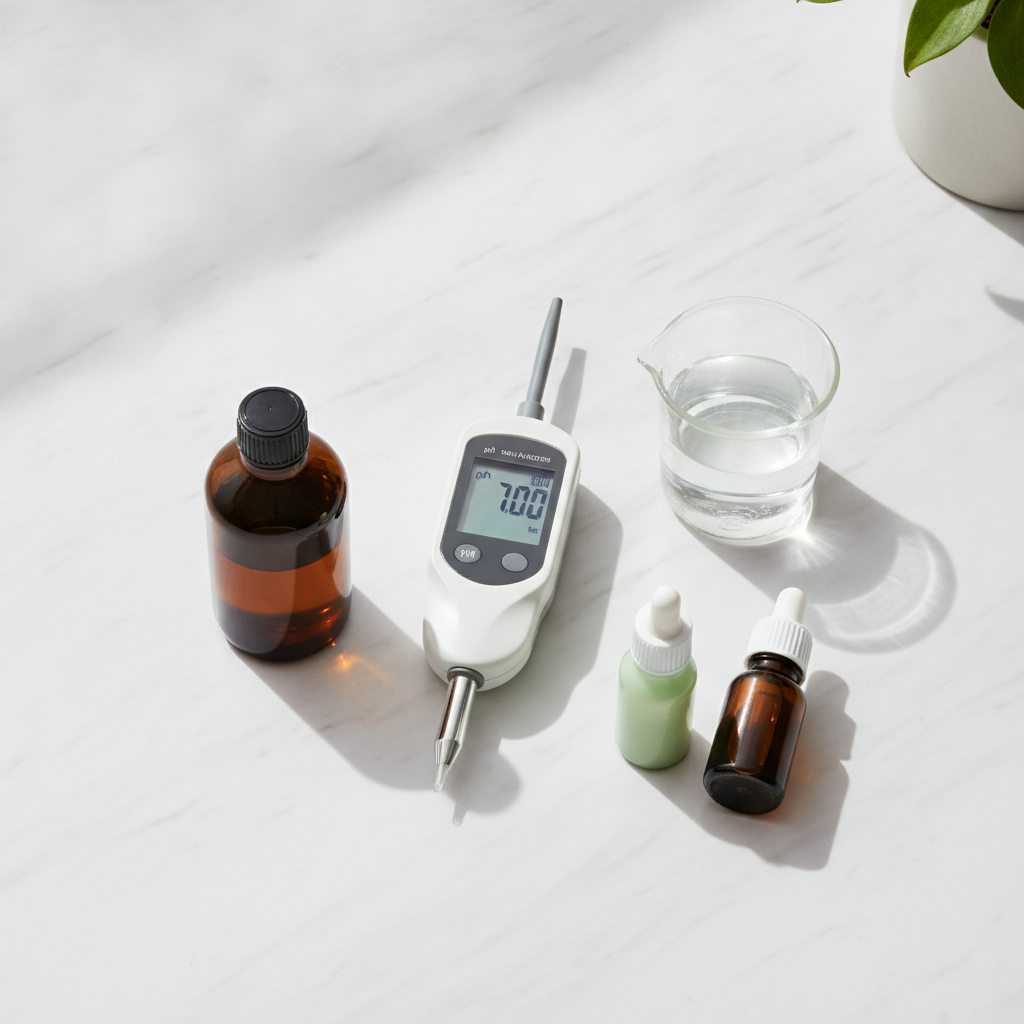
Why Water Chemistry Is the Skill Most Beginners Skip
Talk to almost any experienced home grower about their early mistakes, and pH comes up within the first few minutes. Plants were yellowing, leaves were curling, nutrients were being added—and nothing was helping. The culprit, almost every time, was water being delivered at the wrong pH level, locking out the very nutrients that were supposed to fix the problem.
The good news: this is one of the most solvable problems in home growing. A decent pH meter, a basic understanding of the numbers, and a consistent habit of checking before you water will eliminate a whole category of headaches. This guide covers what meters you actually need, how to use them correctly, and how to interpret what they're telling you—without overcomplicating it.
If you're still figuring out your full setup, the HomeGrow beginner's guide is a good place to start before getting into the weeds on equipment.
Understanding pH: The Foundation
pH measures how acidic or alkaline a solution is, on a scale from 0 to 14. Pure water sits at 7.0 (neutral). For cannabis grown in soil, you want your water and nutrient solution landing between 6.0 and 7.0, with the sweet spot being 6.2 to 6.8. Hydroponic and coco coir growers target a tighter range: 5.5 to 6.5, ideally staying around 5.8 to 6.2.
Why does this matter so much? Different nutrients become chemically available to plant roots only within specific pH windows. Iron, manganese, and zinc become nearly unavailable above pH 7.0. Calcium and magnesium get locked out below pH 5.5. When your water is consistently outside the correct range, you can add all the nutrients you want and the plant simply cannot absorb them. The yellowing you see isn't a deficiency in the traditional sense—it's a pH-induced lockout, and only correcting the water will fix it.
Municipal tap water in many US cities runs between pH 7.2 and 8.0. Well water varies widely by region. Neither is ready to use straight from the tap without testing and adjusting first.
EC and TDS: Measuring Nutrient Strength
Electrical conductivity (EC) and total dissolved solids (TDS) both tell you how concentrated the nutrients in your water are. EC is measured in millisiemens per centimeter (mS/cm) and is the more precise measurement used by serious growers. TDS, measured in parts per million (ppm), is what many beginner-friendly meters display—it's calculated from EC using a conversion factor (typically 0.5 or 0.7 depending on the meter).
For cannabis specifically:
- Seedlings: 0.4–0.8 mS/cm (200–400 ppm at 0.5 conversion)
- Early vegetative: 0.8–1.2 mS/cm (400–600 ppm)
- Peak vegetative: 1.2–2.0 mS/cm (600–1000 ppm)
- Early flower: 1.4–2.2 mS/cm (700–1100 ppm)
- Late flower: 1.0–1.6 mS/cm (500–800 ppm), tapering off
These are guidelines, not absolutes. Different strains, different growing media, and different environments all shift these targets. Plants grown in nutrient-rich soil like FoxFarm Ocean Forest need far less supplemental feeding than plants in inert coco or hydro systems, so you'd feed at the lower end of these ranges in soil.
Checking your EC alongside pH gives you a clearer picture of what's happening. If your plant looks stressed and your EC is reading 3.0+ mS/cm, you're likely dealing with nutrient burn—too much, not too little. If it's reading 0.2 mS/cm and the plant looks hungry, you know it's time to feed.
What Equipment You Actually Need
The One Tool You Cannot Skip: A Quality pH Meter
Cheap pH strips—the kind you dip in water and match to a color chart—are not accurate enough for growing cannabis at home. The color interpretation is too subjective, and 0.5 pH points of error is the difference between healthy plants and chronic lockout. Invest in a digital pH meter.
The Apera pH20 meter is a reliable mid-range option that comes up consistently among experienced home growers. It reads to 0.1 pH accuracy, has automatic temperature compensation (ATC)—which matters because pH readings shift with water temperature—and the electrode is replaceable, meaning you're not throwing the whole unit away when the probe eventually wears out. It runs around $35-45 and represents the right balance of price and reliability for a home grower.
Whatever meter you choose, look for these features:
- Automatic Temperature Compensation (ATC): pH changes with temperature. ATC corrects for this automatically.
- ±0.1 accuracy or better: Anything less precise isn't worth using for cannabis.
- Replaceable electrode: Probes have a lifespan. Replaceable ones save money long-term.
- Calibration capability: Your meter must be calibratable with buffer solutions. More on this below.
EC/TDS Meters: Do You Need One?
If you're growing in pre-amended soil and feeding lightly from a bottle, a TDS meter is useful but not essential when you're starting out. If you're running a hydroponic system, coco coir, or mixing your own nutrients from scratch, it becomes mandatory.
For most beginners in soil, the priority order is: pH meter first, TDS meter second. A basic combo meter (one unit that reads both pH and TDS) can work, but the pH probe quality on combo units is often compromised. It's worth getting a dedicated pH meter and a separate EC/TDS pen if you want accurate readings on both.
Calibrating Your pH Meter (This Is Non-Negotiable)
A pH meter that isn't properly calibrated will give you confidently wrong readings. This is worse than not testing at all, because you'll adjust your water based on bad information and make the problem worse.
Calibration is straightforward. You need buffer solutions—these are liquids with a precisely known, certified pH. For cannabis growing, calibrate with pH 4.0 and pH 7.0 buffer solutions at minimum. Some growers also use a pH 10.0 solution for three-point calibration, but 4.0 and 7.0 covers the relevant range well.
The calibration process on most meters works like this:
- Rinse the probe with distilled water and gently blot dry (never wipe—wiping damages the glass membrane).
- Submerge in pH 7.0 buffer solution and wait for the reading to stabilize. Adjust the meter to read 7.0.
- Rinse again with distilled water, then submerge in pH 4.0 buffer. Adjust to read 4.0.
- Rinse once more. Your meter is calibrated.
How often should you calibrate? Before any important watering session, or at minimum once a week if you're testing daily. If your readings suddenly seem off—plants showing deficiencies despite correct-looking pH—recalibrate before assuming something else is wrong.
Store the probe submerged in storage solution (not distilled water—this actually damages pH electrodes over time). The small cap that came with your meter usually holds a little storage solution; keep it moist.
How to pH Your Water Correctly
The sequence matters: mix nutrients into your water first, then test and adjust pH. Nutrients change the pH of the water significantly—often dropping it—so testing before adding nutrients and adjusting afterward is a common mistake that results in delivering the wrong pH to your plants.
Step-by-step process:
- Fill your watering container with the appropriate amount of water.
- Add any nutrients or supplements and mix thoroughly.
- Test the pH of the solution.
- Add pH Up (potassium hydroxide-based) or pH Down (phosphoric acid-based) in small amounts to adjust.
- Mix well and test again—this takes several rounds for larger volumes.
- Once you hit your target range, water your plants.
When adjusting, add pH Up or Down drop by drop or in very small increments. A little goes a long way, and it's easy to overshoot in either direction. Aim for the middle of your target range (pH 6.5 for soil, 6.0 for coco/hydro) rather than trying to hit an exact number.
Reading Runoff: What Your Drain Water Tells You
Testing only your input water gives you half the picture. Testing the runoff that drains from the bottom of your pot after watering tells you what's actually happening in the root zone—and those two numbers can be very different.
In fabric pots (which promote healthy root structure and drainage), collect the runoff and test it. A few guidelines:
- Runoff pH more than 0.5 points lower than input: Buildup of organic acids or excess salts. Consider a flush or pH-adjusted plain water feed.
- Runoff pH higher than input: Can happen in alkaline soil or with hard water. Consistently water at the lower end of your target range.
- Runoff EC significantly higher than input: Salt accumulation in the medium. This is normal over time but warrants a flush if EC is more than 1.5x your input.
Growing in fabric grow pots makes this easier—they drain freely and air-prune roots, but they also mean runoff is easier to collect cleanly. If you're using plastic pots with limited drainage, getting a clean runoff sample is harder and less reliable.
August-Specific Considerations: Summer Water and pH
If you're growing outdoors—in California, Colorado, Oregon, Michigan, or any other legal state—August brings some specific challenges around water chemistry.
Summer water sources can behave differently. Irrigation water and well water often have higher mineral content in summer due to lower water tables and increased evaporation concentration. Municipal water treatment can also vary seasonally—many cities increase chloramine treatment during summer months, which doesn't affect pH directly but can impact beneficial microbial life in living soil.
For outdoor growers using municipal water, letting water sit uncovered overnight allows chlorine to off-gas. Chloramine, however, doesn't off-gas and requires a Campden tablet (potassium metabisulfite) to neutralize if you're concerned about it in a living soil setup.
Indoor growers running lights through August face a different issue: water temperature. Reservoir water sitting in a warm grow room can reach 72–78°F, which accelerates bacterial growth in hydro systems and affects pH stability. Ideal reservoir temperature is 65–68°F. An aquarium chiller or keeping reservoirs in cooler areas of the room helps maintain this.
With plants in peak vegetative growth this time of year, they're also drinking significantly more water—which means more frequent pH testing, not less. A plant that needed water every three days in June may need it every day or two in August. Each watering is another opportunity for pH drift to cause problems.
Common pH Meter Problems and How to Fix Them
Readings Won't Stabilize
If your meter's reading keeps drifting and won't settle, the electrode may be dry or near end-of-life. Soak the probe in storage solution for 20-30 minutes and try again. If it still won't stabilize, recalibrate. Old probes simply lose their ability to give stable readings—most last 1-2 years with proper care.
Readings Seem Off Despite Correct-Looking Plants
Recalibrate with fresh buffer solutions. Buffer solutions expire and can give wrong reference points if they've been opened for more than a few months. Fresh 4.0 and 7.0 buffer sachets are inexpensive and worth keeping on hand.
pH Keeps Swinging in Hydro
Small reservoirs are prone to pH swings because the volume of liquid is low relative to the plant's uptake. Scale up to a larger reservoir if possible, maintain consistent top-offs with properly pH'd water, and ensure adequate aeration. pH swings in hydro also indicate that the system is working—plants are selectively absorbing nutrients, which changes the solution chemistry. Checking and adjusting daily is normal in hydro, not a sign something is wrong.
Building Good Testing Habits
The growers who avoid pH problems aren't necessarily more skilled—they're just more consistent. A simple habit loop looks like this: fill container, add nutrients, test, adjust, water. It adds about three minutes to your watering routine and prevents hours of troubleshooting later.
Keep a simple log—even a notes app on your phone works—recording your input pH, input EC, runoff pH, and runoff EC each time you water. Over a few weeks, you'll start to see patterns: how quickly your pH drifts, whether certain nutrients push pH up or down, what runoff looks like at different stages of growth. This data makes you a better grower faster than any amount of reading.
If you notice symptoms developing despite seemingly correct pH, the HomeGrow plant diagnosis tool can help you identify whether you're dealing with a pH issue, a true deficiency, pests, or something environmental. And if you're comparing different setups or nutrient strategies, the equipment guide covers the full range of options across different growing systems.
Frequently Asked Questions
How often should I test my water's pH?
Every time you water or feed. This isn't an area where you can cut corners and assume it's fine. Water sources can shift seasonally, nutrient solutions change pH, and getting in the habit of testing each time takes less than two minutes once it's routine. If you're running a hydroponic or coco system, you may need to check and adjust daily.
What's the difference between pH Up and pH Down, and are they safe?
pH Up is typically potassium hydroxide or potassium silicate—it raises pH. pH Down is usually phosphoric acid—it lowers pH. Both are strong chemicals in concentrated form and should be handled with care: avoid skin contact and keep away from eyes. When diluted into a reservoir or watering can, they're safe for plant use. Always add them to water (not water to them) and mix well before testing.
Can I use a cheap $10 pH pen from Amazon?
You can, but accuracy is a real concern at that price point. Many inexpensive pens advertise ±0.1 accuracy but drift significantly without stable calibration. If budget is tight, a reliable $35-45 meter is a better long-term investment than replacing cheap pens repeatedly. Think of it as the cost of one or two nutrient bottles spread over years of growing.
My tap water is pH 7.8. Is that a big problem?
It's manageable. Most home growers using municipal tap water deal with something in the 7.0–8.0 range. You'll be adding pH Down regularly to bring it into range, which is normal. If you're on a living soil system with a healthy microbial population, the soil itself can buffer moderate pH fluctuation—but you still want to get your input water below 7.0. Consistently watering at pH 7.8 in soil will cause lockout over weeks even in buffered media.
Do I need a separate meter for EC and pH, or will a combo unit work?
For most home growers in soil, a dedicated pH meter plus a basic TDS pen is the better approach. Combo meters compromise on electrode quality, and the pH reading is what matters most. If you're in hydroponics or coco, invest in separate quality meters for each—your results are directly dependent on both readings being accurate, and the cost difference is modest compared to a failed harvest.