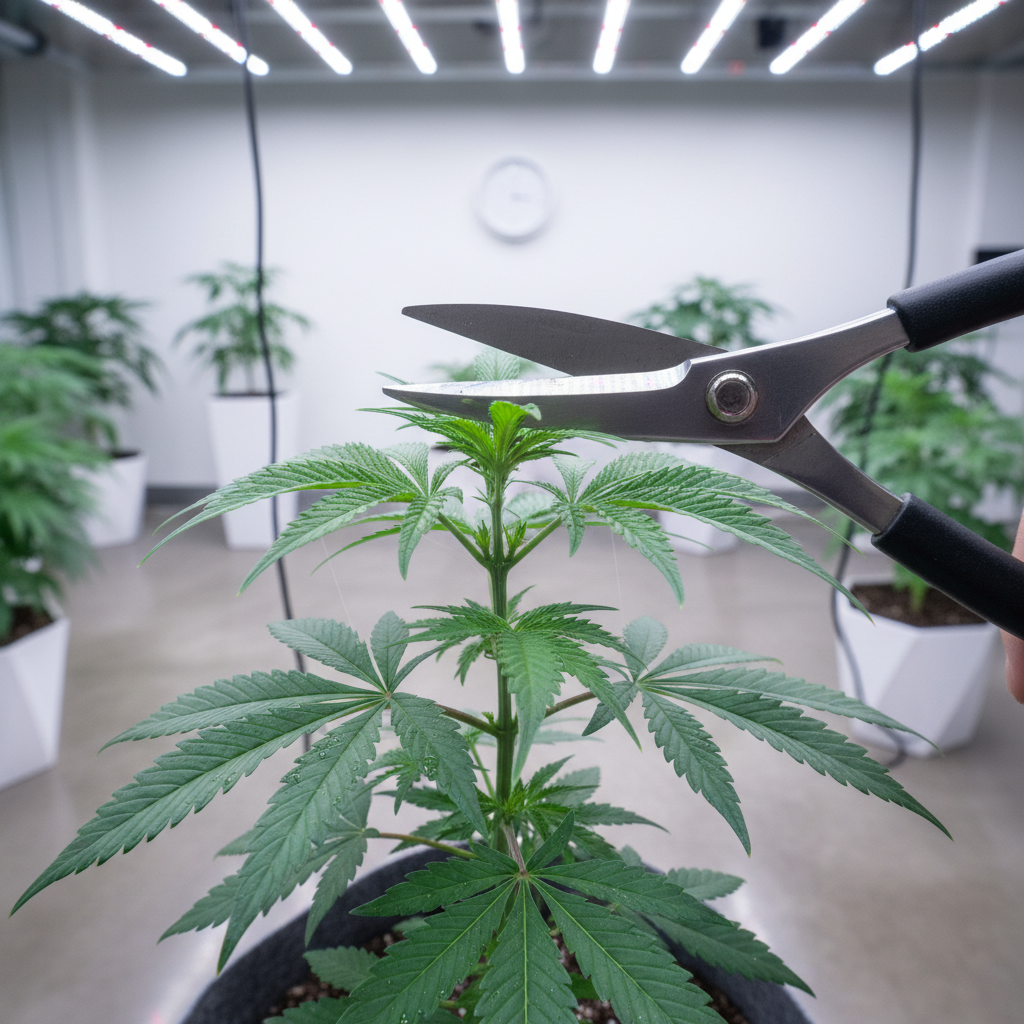
The Great Autoflower Topping Debate
The cannabis growing community remains split on topping autoflower plants. Traditional wisdom says never top autos due to their fixed lifecycle and limited recovery time. Yet experienced growers regularly top their autoflowers with excellent results. Understanding when, how, and why to top autoflowers can significantly impact your harvest quality and yield.
This comprehensive guide examines both sides of the debate, providing specific timing guidelines, proven techniques, and alternative training methods to help you make informed decisions for your grow operation.
Why Most Growers Avoid Topping Autoflowers
The Fixed Lifecycle Problem
Autoflower plants operate on a predetermined genetic timeline, typically flowering after 3-4 weeks regardless of light schedule. This compressed vegetative period leaves minimal time for recovery from high-stress training techniques like topping. When you remove the main cola, the plant requires 5-10 days to redirect hormonal signals and resume vigorous growth.
In photoperiod plants, growers control the vegetative phase duration, allowing ample recovery time. Autoflowers don't offer this luxury. A plant that enters flowering while still recovering from topping often produces lower yields than an untrained counterpart.
Stress Response Complications
Topping triggers significant stress responses in cannabis plants. The sudden removal of the apical meristem (growing tip) disrupts auxin hormone distribution throughout the plant structure. While photoperiod plants can recover fully with extended vegetative periods, autoflowers may channel recovery energy into flower production instead of structural development.
Stressed autoflowers frequently exhibit:
- Stunted vertical growth during crucial early development
- Delayed lateral branch formation
- Reduced overall biomass accumulation
- Earlier flowering onset while still recovering
Genetic Variability Concerns
Early autoflower genetics were notoriously unstable and sensitive to stress. Many older varieties would hermaphrodite or significantly reduce yields when subjected to high-stress training. These experiences shaped the widespread recommendation against topping autoflowers.
When Experienced Growers Top Autoflowers Successfully
Modern Genetics Make the Difference
Contemporary autoflower breeding has produced significantly more robust and stable genetics. Modern cultivars from reputable breeders often handle moderate stress without major yield penalties. These plants feature improved vigor, extended vegetative periods, and better stress tolerance.
Successful auto-toppers typically work with proven genetics that demonstrate consistent performance under training stress. They've identified specific varieties that respond positively to topping when executed properly.
Optimal Growing Conditions
Experienced growers who top autoflowers maintain ideal environmental conditions that facilitate rapid recovery. These include:
- Consistent temperatures between 70-78°F (21-26°C)
- Relative humidity levels of 60-70% during vegetative growth
- High-quality soil like FoxFarm Ocean Forest that provides excellent drainage and nutrition
- Appropriate container sizing using fabric pots for superior root development
- Adequate lighting intensity (minimum 35-40 DLI)
Perfect environmental control allows topped plants to recover quickly and continue aggressive vegetative development before flowering begins.
Selective Application Strategy
Professional growers don't top every autoflower plant. Instead, they selectively choose their strongest, most vigorous specimens for topping while using low-stress training on others. This approach maximizes garden diversity and ensures backup plants if topping doesn't produce desired results.
Critical Conditions for Successful Autoflower Topping
Plant Health Requirements
Only exceptionally healthy autoflowers should be considered for topping. The plant must exhibit:
- Vigorous daily growth with new node development every 24-48 hours
- Deep green coloration indicating proper nitrogen levels
- Strong, thick main stem capable of supporting multiple colas
- Well-developed root system (visible through fabric pot drainage holes)
- No signs of nutrient deficiencies, pests, or diseases
Any plant showing stress symptoms should be trained using low-stress methods instead of topping.
Genetic Suitability
Certain autoflower lineages respond better to topping than others. Indica-dominant varieties often handle stress better than pure sativas. Additionally, autoflowers with extended vegetative periods (25-35 days) provide more recovery time than quick-flowering varieties.
Research your specific strain's characteristics before attempting topping. Check breeder information, growing forums, and strain reviews for topping experiences and results.
Environmental Stability
Fluctuating environmental conditions compound topping stress. Successful auto-topping requires stable conditions throughout the recovery period. Temperature swings, humidity fluctuations, or lighting inconsistencies can prevent proper recovery and reduce final yields.
Precise Timing for Topping Autoflowers
The Critical Window: Days 14-21
Successful autoflower topping occurs within a narrow window, typically between days 14-21 from germination. This timing coincides with rapid vegetative development but precedes pre-flowering stretch. Topping too early risks stunting overall development, while late topping interferes with flowering preparation.
Node Development Indicators
Rather than relying solely on calendar days, experienced growers use node development as the primary timing indicator. The optimal topping point occurs after the plant develops 4-5 complete node sets. At this stage:
- The main stem has sufficient thickness to handle topping stress
- Lower branches show active development and can assume apical dominance
- The root system has established adequate size to support recovery
- Sufficient vegetative time remains before flowering onset
Pre-Flower Recognition
Understanding pre-flowering indicators helps avoid late topping mistakes. Signs that flowering preparation has begun include:
- Internode spacing increases (stretching begins)
- Growth rate slows compared to early vegetative vigor
- Small pre-flowers appear at node intersections
- Overall plant structure shifts from bushy to vertical
Once pre-flowering begins, topping is no longer advisable for autoflowers.
Step-by-Step Topping Technique
Required Tools and Preparation
Proper topping requires specific tools and preparation:
- Sharp, sterile scissors or pruning shears
- Isopropyl alcohol (70% minimum) for sterilization
- Clean paper towels
- Optional: rooting hormone or kelp meal for recovery support
Sterilize cutting tools before use to prevent pathogen transmission. Choose cutting implements appropriate for stem thickness – thin stems require precision scissors while thicker stems need quality pruning shears.
The Cutting Process
Step 1: Identify the cutting location. Locate the newest growth tip (apical meristem) above the 4th or 5th node set. The cut should remove only the growing tip while preserving the upper fan leaves.
Step 2: Make the cut. Using sterilized tools, make a clean cut approximately 1/4 inch (6mm) above the node intersection. Cut straight across the stem rather than at an angle. Avoid crushing or damaging the stem during cutting.
Step 3: Monitor the wound. The cut surface should appear clean and green. Brown or black coloration indicates potential infection risk. Healthy cuts typically seal within 24-48 hours.
Step 4: Adjust plant support. Remove any plant ties or supports that may interfere with new branch development. Allow the plant structure to adapt naturally to its new growth pattern.
Post-Topping Care
Proper aftercare determines topping success:
- Reduce watering frequency for 2-3 days to prevent root stress during recovery
- Maintain stable environmental conditions without fluctuations that could compound stress
- Avoid additional training for at least one week while hormonal redistribution occurs
- Monitor new growth from lateral branches, which should accelerate within 3-5 days
Low-Stress Training: The Safer Alternative
LST Fundamentals for Autoflowers
Low-stress training offers many topping benefits without recovery time penalties. LST involves gently bending and securing branches to create an even canopy without removing plant material. This technique works particularly well with autoflowers because it doesn't trigger significant stress responses.
Effective LST begins early in vegetative development, around day 10-14, when stems remain flexible but strong enough to handle manipulation. The goal is gradually creating horizontal growth that exposes lower branches to direct light.
LST Implementation Steps
Week 1-2: Begin by gently bending the main stem away from center and securing it with soft plant ties. Use VIVOSUN fabric pots with multiple tie-down points for easier anchor locations.
Week 3-4: Continue adjusting main stem position while training emerging side branches outward. Create a circular or rectangular canopy shape depending on available space.
Week 5+: Fine-tune branch positions as flowering begins. Avoid aggressive adjustments once buds start developing, as flowering branches become more brittle.
Combining Topping and LST
Advanced growers sometimes combine topping with LST for maximum canopy control. This approach requires exceptional timing and plant health:
- Top the plant on day 14-16 when showing vigorous growth
- Allow 5-7 days for initial recovery and new branch development
- Begin LST on the strongest 2-4 branches that emerge from topping
- Continue LST throughout remaining vegetative period
This combined approach can produce exceptional yields but requires significant experience and ideal growing conditions.
Autoflower Strains That Handle Topping Well
Northern Lights Auto
Northern Lights Auto consistently ranks among the most stress-tolerant autoflower varieties. This indica-dominant strain features robust genetics, extended vegetative periods (25-30 days), and excellent recovery characteristics. Experienced growers report successful topping results with minimal yield penalties when proper timing is observed.
The strain's naturally bushy structure benefits from topping, which promotes even lateral development and prevents single-cola dominance. Average yields increase 15-25% when topping is executed correctly compared to untrained plants.
Gorilla Glue Auto
Gorilla Glue Auto demonstrates exceptional vigor and stress tolerance, making it suitable for advanced training techniques. This hybrid variety produces thick, sturdy stems capable of supporting multiple heavy colas after topping.
The strain's 28-35 day vegetative period provides adequate recovery time when topped between days 16-20. Growers consistently report successful results with proper environmental control and timing.
Other Suitable Varieties
Additional autoflower strains that respond well to topping include:
- White Widow Auto: Balanced hybrid with excellent stress tolerance
- AK-47 Auto: Vigorous growth and extended vegetative period
- Critical Mass Auto: Robust genetics and heavy-yielding potential
- Amnesia Haze Auto: Strong sativa-dominant variety with good recovery
When to Avoid Topping Autoflowers
Stressed or Unhealthy Plants
Never top autoflowers showing any stress symptoms. Common stress indicators include:
- Yellowing or discolored leaves indicating nutrient issues
- Slow growth rates compared to variety specifications
- Pest presence or damage
- Environmental stress from temperature or humidity fluctuations
- Root problems visible through poor upper growth
Stressed plants lack the energy reserves necessary for quick recovery from topping. Focus on addressing underlying issues before considering high-stress training techniques.
Slow-Growing Varieties
Some autoflower genetics naturally exhibit slower development patterns. These varieties typically feature short vegetative periods (18-25 days) that don't provide adequate recovery time after topping. Quick-flowering sativas often fall into this category.
Research your specific strain's growth characteristics before planning training approaches. Seed bank descriptions usually indicate vegetative period length and suitable training methods.
Beginner Growers
First-time growers should focus on mastering basic cultivation skills before attempting autoflower topping. The technique requires precise timing, environmental control, and the ability to recognize plant health indicators quickly.
New growers benefit more from LST experience, which provides training benefits with much lower risk. Master low-stress techniques first, then progress to more advanced methods as experience develops.
Suboptimal Growing Conditions
Topping requires ideal environmental conditions for successful recovery. Avoid topping when:
- Temperature control is inconsistent or outside optimal ranges
- Lighting intensity is insufficient for rapid recovery
- Humidity levels fluctuate significantly
- Air circulation is poor
- Growing medium quality is questionable
Measuring Success and Troubleshooting
Recovery Timeline Expectations
Successful autoflower topping follows predictable recovery patterns:
- Days 1-2: Initial shock with temporarily slowed growth
- Days 3-5: Lateral branch acceleration and hormonal redistribution
- Days 6-10: Rapid new growth from multiple points, canopy evening
- Days 11+: Normal growth patterns resume with improved structure
Deviations from this timeline indicate potential problems requiring intervention.
Common Problems and Solutions
Slow Recovery: If lateral branches don't show increased activity within 5-7 days, environmental conditions may be suboptimal. Check temperature, humidity, and lighting levels against ideal specifications.
Infection at Cut Site: Brown or black discoloration around the cut indicates potential pathogen infection. Remove affected tissue with sterile tools and improve air circulation around the plant.
Stunted Overall Growth: Complete growth cessation suggests the plant was unsuitable for topping. Focus on stress reduction and optimal care to minimize yield impact.
Frequently Asked Questions
Can I top autoflowers multiple times?
Multiple topping of autoflowers is generally not recommended due to their fixed lifecycle. Each topping event requires 5-10 days recovery time, and autoflowers typically have only 25-35 days of vegetative growth. A single well-timed topping provides better results than multiple stress events. Experienced growers occasionally perform a second topping on extremely vigorous plants, but this requires exceptional genetics and perfect conditions.
What's the difference between topping and FIMming autoflowers?
FIMming (F*** I Missed) involves removing approximately 75% of the new growth tip rather than a complete cut. This technique theoretically causes less stress than topping while still encouraging lateral development. However, FIMming results are less predictable than clean topping cuts, and autoflowers benefit from consistent, predictable training methods. Most experienced growers prefer clean topping over FIMming for autoflowers.
How do I know if my autoflower genetics are suitable for topping?
Research breeder information, strain reviews, and growing forums for specific variety experiences. Look for autoflowers with 25+ day vegetative periods, indica-dominant genetics, and documented stress tolerance. Start with proven varieties like Northern Lights Auto or Gorilla Glue Auto before experimenting with untested genetics. Keep detailed records of your results to build strain-specific knowledge.
Should I use any supplements after topping autoflowers?
Kelp meal or liquid kelp extracts can support recovery by providing natural growth hormones and stress-reducing compounds. Apply diluted kelp solution (1/4 strength) 24-48 hours after topping. nitrogen fertilizers immediately after topping.
Is LST better than topping for autoflowers?
For most growers, especially beginners, LST is the safer choice. It provides canopy control without recovery time penalties. Experienced growers with optimal conditions can achieve superior results combining a single topping with ongoing LST.